
White County Criminal Court Records
A criminal court record is the case file the court keeps once a prosecution opens. In White County, felony and serious criminal matters are tied to Superior Court and the Clerk of Court, while Magistrate Court handles criminal warrants and listed misdemeanor matters. Probate Court can handle misdemeanor traffic citations and game or fish violations. Cleveland and Helen municipal courts handle city traffic and local ordinance matters. The court file is separate from the Sheriff's arrest or booking report, even when both refer to the same incident.
Superior Court is part of the Enotah Judicial Circuit. The prosecuting authority for felony and serious state criminal matters is the Enotah Judicial Circuit District Attorney, identified by the Prosecuting Attorneys' Council of Georgia as Jeff Langley. The public defender listing for White County places the Enotah Circuit public defender office in Cleveland. Those offices help explain the case path, but public copies and certified court records are still obtained from the court or clerk that maintains the file.
The Prosecuting Attorneys' Council listing for White County identifies the Enotah Judicial Circuit prosecutor connected to White County criminal court records.

That prosecutor source is relevant to charges and prosecution, while the clerk remains the access point for court-file copies.
Search White County Criminal Court Records
White County does not publish a single open criminal case database on the county court pages reviewed in the research. Start with the court. Superior Criminal records route through the White County Clerk of Court. The GSCCCA clerk profile points to PeachCourt for Superior Criminal e-filing and to eCertification for copy requests. Georgia Courts' e-access page routes users to provider sites that require accounts, including re:SearchGA for case information and documents in participating counties. Municipal criminal or ordinance matters stay with the city court.
- Confirm whether the case is Superior, Magistrate, Probate traffic, Cleveland Municipal, Helen Municipal, or federal.
- Search available provider channels only when the court and case type are covered.
- Use the defendant name, case number, citation number, filing date, or charge when those fields are accepted.
- Read the docket for arraignment, plea, hearing, disposition, and sentence entries.
- Request a certified disposition, sentence, or judgment from the clerk or court custodian if an official copy is required.
State criminal-history information is different from a court case file. The Sheriff's FAQ says a local criminal history requires a consent form signed in person, a driver's license copy, $10 exact cash, and Monday-Friday daytime service. Georgia record restriction questions route through the GBI and prosecutor process described by state law.
White County Criminal Case Stages
The criminal court record grows as the case moves. The first court file may begin with an accusation, indictment, citation, warrant-related filing, or other charging document. Later entries can include arraignment, bond orders, motions, continuances, hearings, plea negotiations, trial settings, verdicts, dismissal orders, dead-docket activity, sentencing, restitution, probation, or appeal notices. Not every case reaches trial. Many cases end by plea, dismissal, reduction, or diversion-like handling when permitted.
Case flow: Charges Filed › Arraignment › Pretrial / Motions › Plea or Trial › Disposition › Sentencing
| Stage | What Happens |
|---|---|
| Charges filed | A complaint, accusation, indictment, citation, or related filing opens the criminal court track. |
| Arraignment | The defendant is advised of charges and enters a plea, often guilty, not guilty, or nolo contendere. |
| Pretrial / motions | Attorneys file requests, raise defenses, address evidence, seek continuances, or negotiate resolution. |
| Plea or trial | The case resolves by plea, bench trial, jury trial, dismissal, or another court-approved outcome. |
| Disposition | The docket records the outcome for each charge, including guilty, dismissed, not guilty, or other result. |
| Sentencing | The court enters punishment or conditions, such as jail, probation, fine, restitution, or treatment terms. |
What White County Criminal Records Show
No official White County criminal case sample was available without account access during the research sweep. The inventory below reflects typical criminal court record fields for Georgia practice and the local White County courts identified in the research. A provider portal may show a shorter view than the clerk file. A certified copy may include court seal, certification, and full disposition data that an online index does not show.
| Field | What It Shows |
|---|---|
| Case number | The criminal case identifier used by the court, clerk, prosecutor, and copy request channels. |
| Defendant | The person charged, with identifiers limited or redacted when law or court policy requires. |
| Charges | Offense names, statute or citation references, severity, and whether charges were added or reduced. |
| Attorney / prosecutor | Defense counsel, public defender, prosecutor, or self-represented status where shown. |
| Hearings | Arraignment, motion, calendar call, trial, plea, sentencing, or other court dates. |
| Plea | Guilty, not guilty, nolo contendere, or other plea entries. |
| Disposition | Final or current outcome, including guilty, dismissed, acquitted, dead docketed, or transferred. |
| Sentence | Jail, probation, fine, restitution, treatment, service, or special conditions when ordered. |
The Georgia Public Defender Council listing identifies the White County Enotah Circuit public defender contact for eligible defendants.
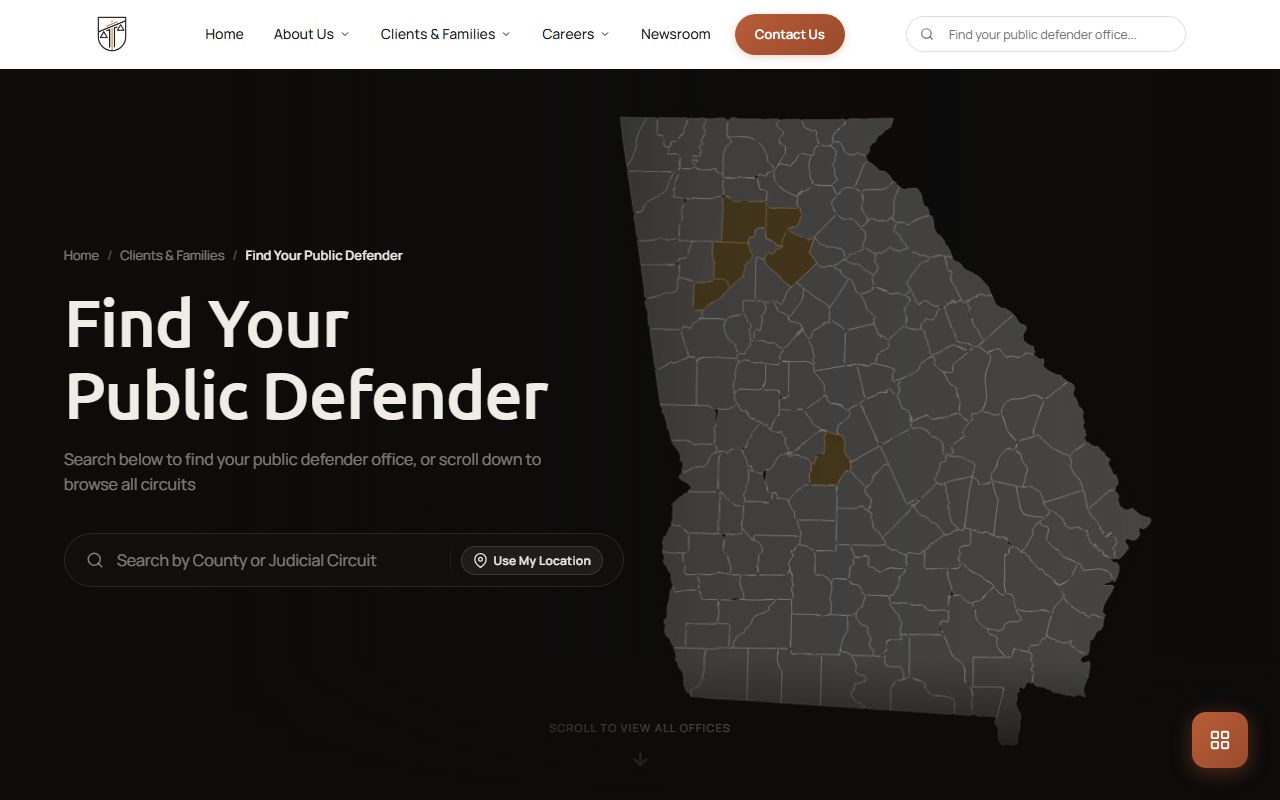
Defense representation may appear in the criminal case record, but eligibility and representation questions belong with the public defender office.
White County Charges vs Convictions
A charge is an accusation. A conviction is a final result based on a guilty plea, nolo plea treated as allowed by law, or verdict. White County criminal court records may show charges that were later dismissed, reduced, amended, dead docketed, or followed by an acquittal. That is why a criminal case record should be read charge by charge, not just by the first arrest or first docket entry. For the charging side itself, see the White County arrest records and court charges pathway.
| Charge | Conviction | |
|---|---|---|
| Stage | Accusation or filed offense | Final result after plea or verdict |
| Proof level | Based on probable cause or charging decision | Based on court finding, plea, or verdict |
| Docket effect | May be pending, amended, dismissed, or reduced | Usually tied to sentence, fine, probation, or judgment |
| Record reading | Check status and disposition | Check sentence and final order |
Reading White County Dispositions
The disposition line tells what happened to a charge or case. Common results include guilty, not guilty, dismissed, nolle prosequi, acquitted, bound over, transferred, or dead docketed. A sentence line may show jail days, probation, fine, restitution, community service, treatment, or special conditions. A bond entry is not a sentence. A warrant entry is not a conviction. A dismissal is not always the same as a record restriction.
Some cases have more than one charge and more than one result. A defendant may plead to one count while another count is dismissed or reduced. A court may sentence on one charge and merge another. If the record is being used for licensing, employment screening, immigration, housing, custody, or firearms decisions, get a certified disposition from the Clerk of Court or the court that owns the case.
Sealed vs Restricted Criminal Records
Georgia more often uses record restriction than the everyday term expungement. The GBI record restriction page cites O.C.G.A. 35-3-37 and explains eligibility and process differences based on date and outcome. For arrests after July 1, 2013, GBI says there is no application process and the person should contact the prosecutor. For arrests before that date, the person applies through the arresting agency.
| Sealed / Restricted | Expunged | |
|---|---|---|
| Georgia term | Record restriction is the main state process for many criminal-history limits. | Common public term, but not always the technical Georgia process. |
| Public view | Eligible information may be restricted from public non-criminal-justice access. | Do not assume every court document is destroyed. |
| Who to contact | Prosecutor, arresting agency, GBI, or court depending on date and record type. | Ask the court or agency which Georgia process applies. |
| Limits | Courts and law enforcement may retain access under law. | Eligibility depends on statute, outcome, and court orders. |
The GBI criminal history record restriction page is the state source for Georgia restriction rules.
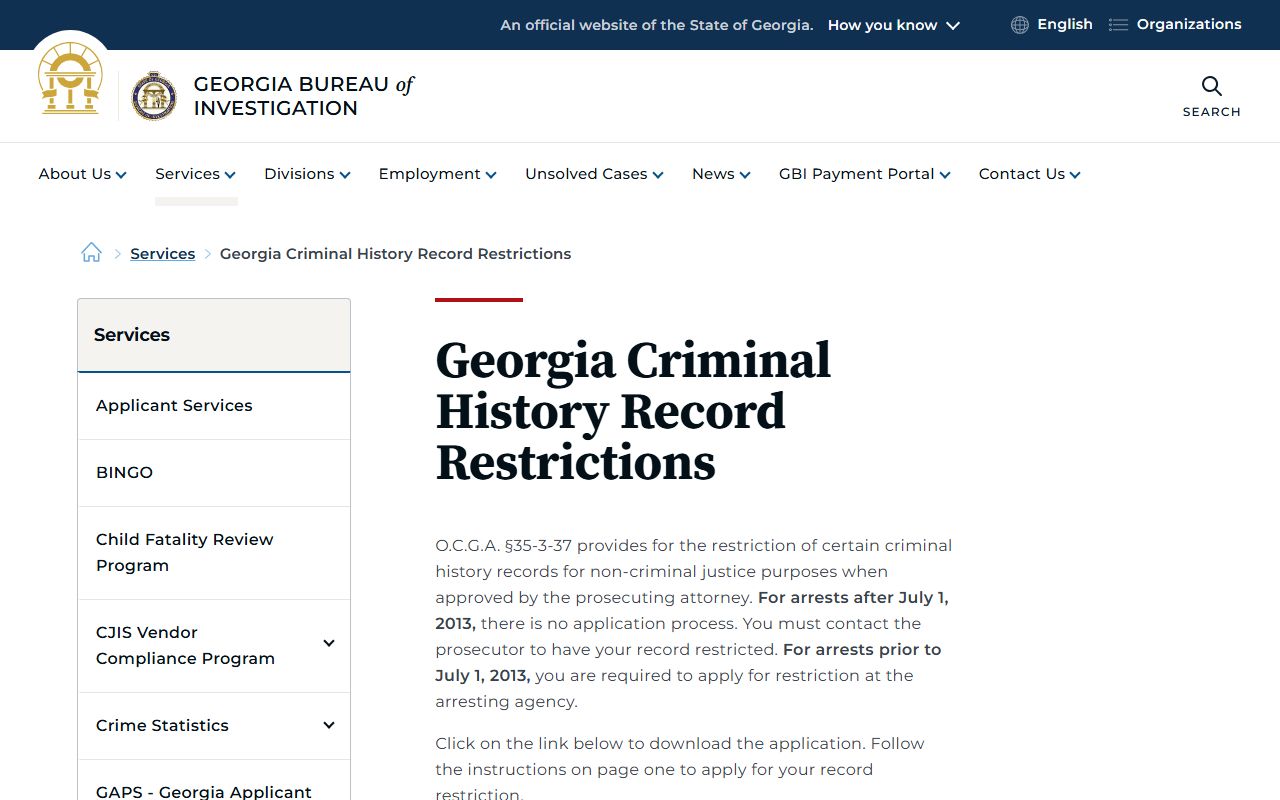
White County criminal court records may still require court or prosecutor action even when the state restriction process applies.
Public Access to White County Criminal Records
Georgia public access starts with the rule that public records are presumed open unless a statute, court order, or exemption applies. O.C.G.A. 50-18-70 and 50-18-71 govern open-records access and fees for many public records. Court records also depend on court rules and the custodian's authority. White County's general open-records form excludes court offices, Clerk records, District Attorney records, divorce records, and Sheriff's Office records, so criminal court records should be requested from the court or clerk rather than the general county form.
Juvenile criminal matters are restricted under Georgia juvenile law. Adoption records are sealed. Some criminal-history data can be restricted under O.C.G.A. 35-3-37. Personal identifiers, victim data, medical data, and sealed information can be redacted. Open or pending investigative material may be routed through the District Attorney for review, and the Sheriff's open-records page directs open or pending report requests to the White County District Attorney's Office number published in the research.
Note: Public access to a criminal docket does not guarantee public access to every document, exhibit, or identifier in the file.
Federal Criminal Records Near White County
Federal criminal records are not held by the White County Clerk of Court. Federal matters use the U.S. District Court for the Northern District of Georgia when federal jurisdiction exists. White County is associated with the Gainesville Division in the Northern District court information. Federal docket and document access usually runs through PACER and federal CM/ECF systems, with federal fees and login rules that differ from local Georgia court access.
The Northern District of Georgia CM/ECF court information page identifies federal filing and court information for the district.
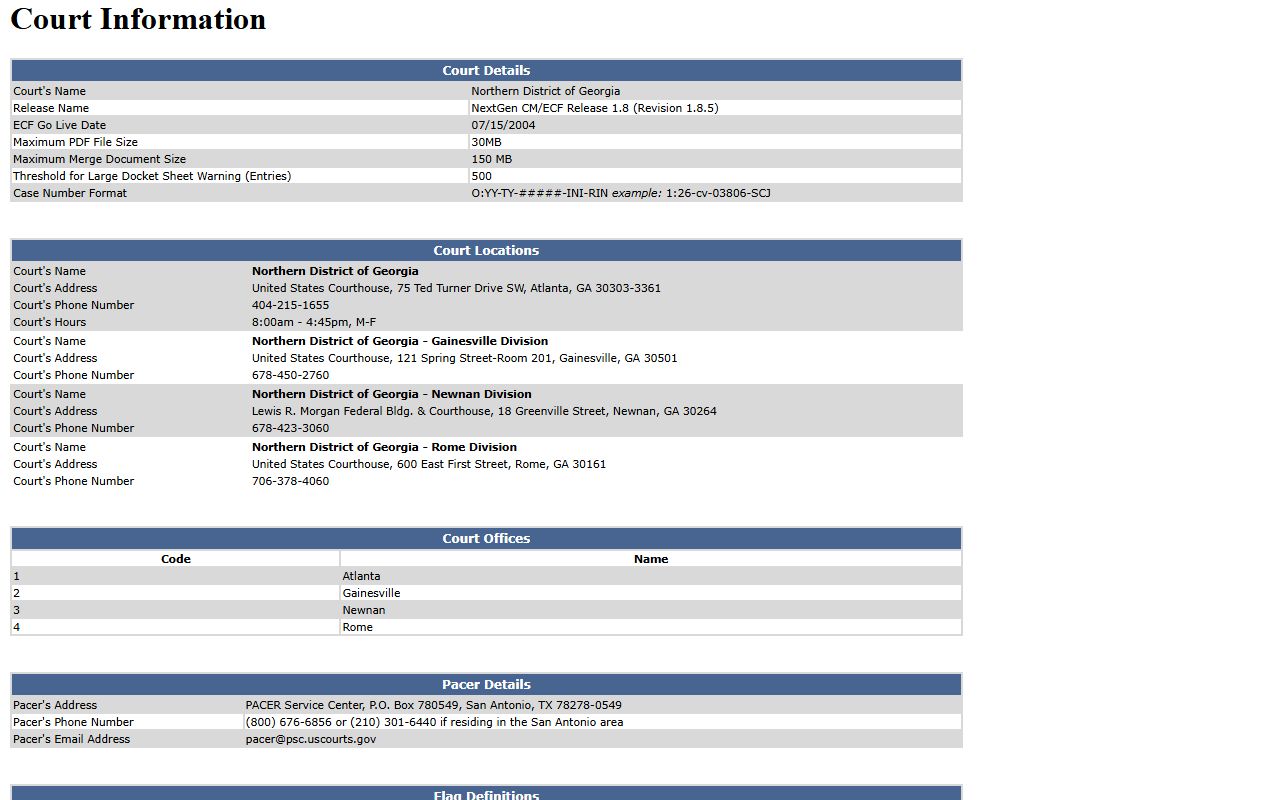
Federal electronic filing information is separate from White County Superior Court criminal case records.
The PACER portal is the federal court records system for U.S. district, bankruptcy, and appellate case files.
PACER should be used only for federal records, not for local White County criminal cases.
Bankruptcy and Other Federal Files
Some records that appear during a background check are not criminal case files at all. Bankruptcy cases, civil federal cases, appeals, and agency prosecutions may use federal systems. A bankruptcy docket in the Northern District of Georgia is separate from a White County criminal court record, even if the same person's name appears. Separate court systems mean separate filing offices, separate search tools, and separate copy rules.
The U.S. Bankruptcy Court for the Northern District of Georgia maintains bankruptcy court information for the federal district.
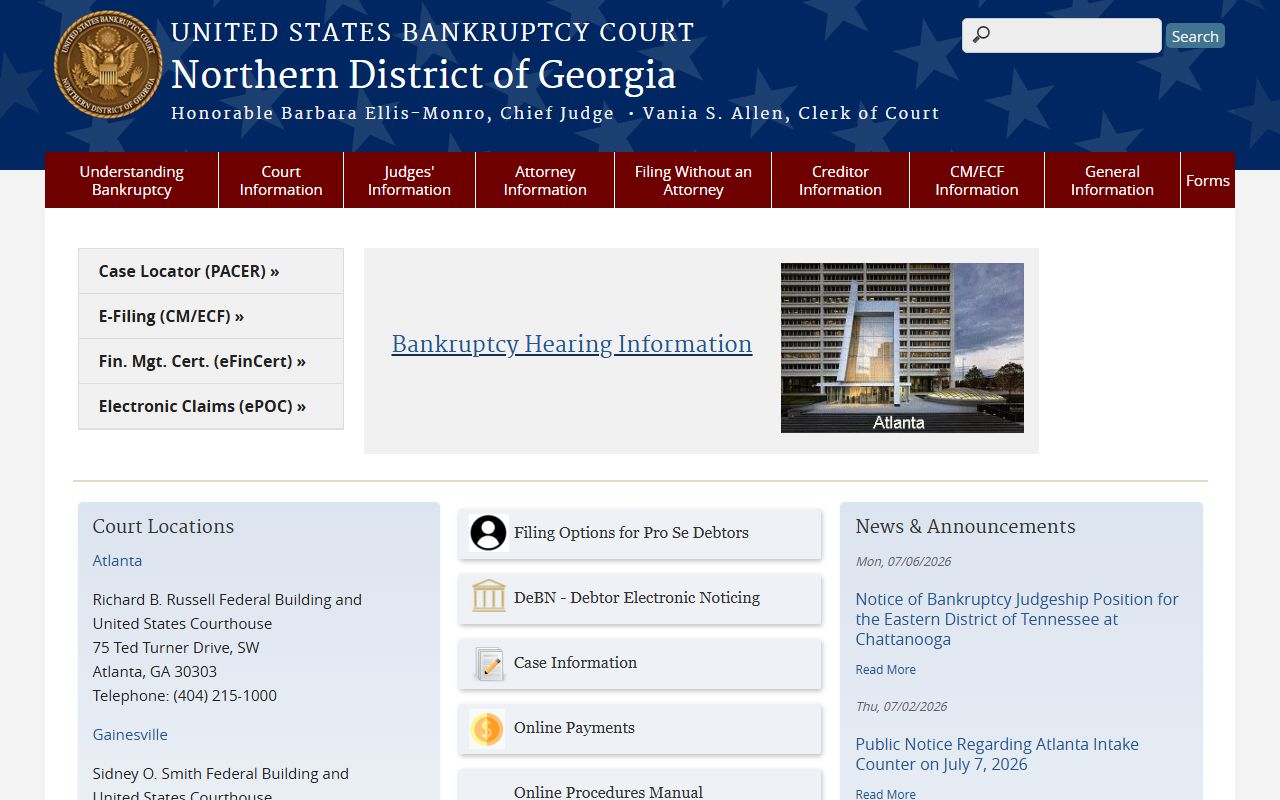
Bankruptcy records can matter in a records search, but they are not White County criminal court records.