
White County Probate Records
White County Probate Court is the local court of record for estate administration, wills, guardianships, marriage licenses, vital-record functions, firearms licenses, and several other statutory duties. The county research identifies Judge Don Ferguson as the Probate Court judge. The office also handles misdemeanor traffic citations and game and fish violations, so a person looking for a citation record should confirm whether the case belongs with Probate Court, Cleveland Municipal Court, Helen Municipal Court, or another venue.
The local Probate Court page states that documents filed in the court must be recorded in minute books and kept permanently available to the public. That rule is important for estate and court-record access, but it does not make every probate-related detail public. Guardianship files can contain protected medical or personal information. Vital records have their own eligibility rules. Adoption files are Superior Court matters and are sealed under Georgia law, so adoption access should not be treated like a routine estate-file request.
The official White County Probate Court page shows the local probate office, judge, hours, address, phone, and list of services. It is the lead source for deciding whether a White County probate records request belongs at the courthouse counter or through a state vital-record channel.
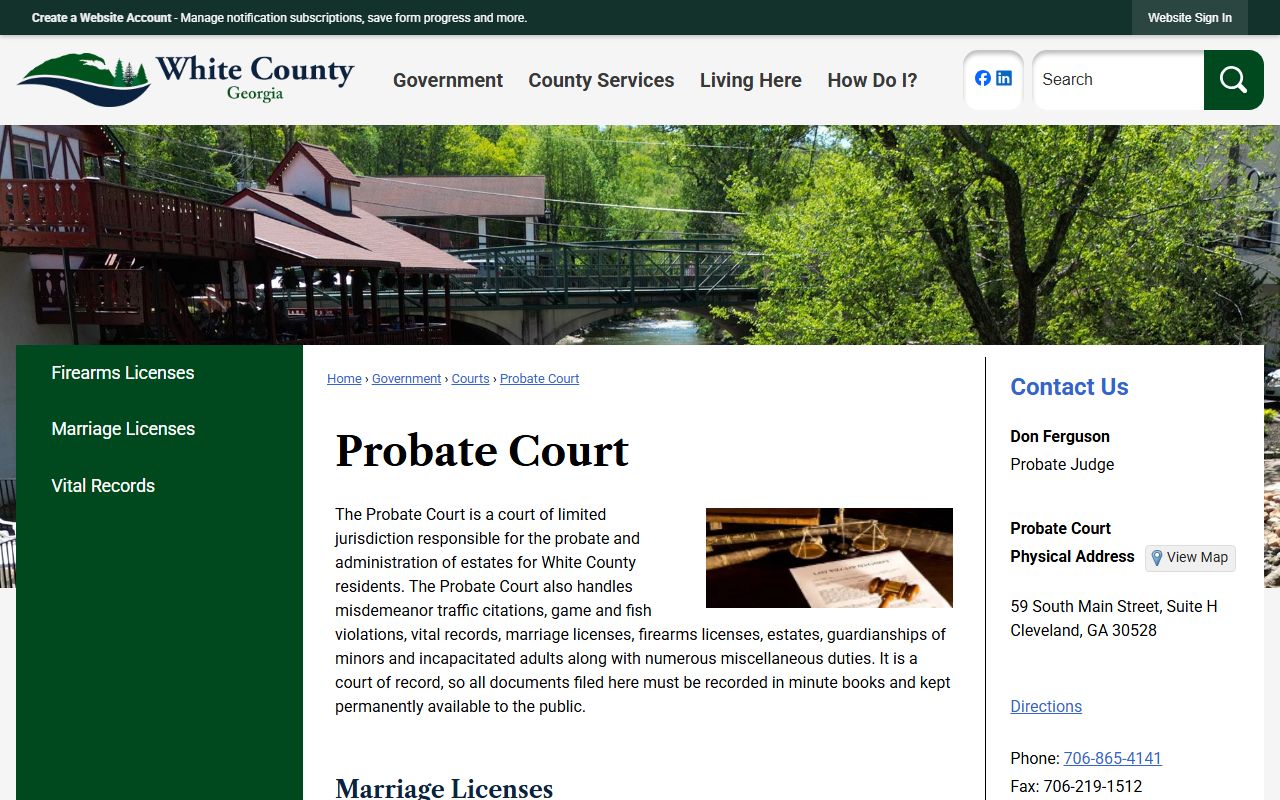
The county Probate Court source is the practical starting point because it ties local estate, guardianship, marriage, vital, firearms, and traffic functions to one White County office.
White County Probate Terms
Probate words can sound more complex than the records themselves. In White County, the terms below help separate an estate file from a guardianship file, a will from an administration case, and a public minute-book entry from a record that may need proof of authority before release.
- Testator
- The person who made a will.
- Executor
- The person named in a will to carry out the estate duties after court authority is granted.
- Intestate
- A death without a valid will, which may require estate administration under Georgia law.
- Guardianship
- Court authority over personal care decisions for a minor or an incapacitated adult.
- Conservatorship
- Court authority over money or property for a protected person.
Search White County Probate Records
White County does not publish a county-branded public probate docket search in the research materials. The safer access path is to identify the record type first, then use the correct custodian. Estate, will, guardianship, firearms-license, and local probate minute-book questions go to White County Probate Court. Marriage-license questions also start with Probate Court, but certified marriage copies and older marriage research can involve state vital-record resources depending on the record date and requested copy type.
For a local probate file, call or visit the court before sending a broad open-records request. The general White County open-records form warns that it is not for Probate Court marriage license requests and not for court records held by court offices. That means a request sent through the wrong county form can be delayed or rejected. Direct office contact is more reliable when the request involves a case number, estate name, decedent name, fiduciary name, marriage-license copy, or guardianship matter.
- Decide whether the record is an estate, guardianship, marriage, vital-record, firearms, traffic, or other Probate Court matter.
- Contact White County Probate Court for local filings, certified local copies, and questions about inspection limits.
- Use state vital-record channels when the request is for a Georgia vital record outside the local court's release path.
- Ask what proof of identity, party status, or court order is needed if the file involves a minor, protected adult, medical facts, or sealed material.
The Georgia Department of Public Health Vital Records page is a separate channel for vital-record access. It supports the local court path, but it does not replace the White County Probate Court for local probate filings.

State vital-record access matters when the requested probate-related record is a certified vital record rather than a local estate or guardianship court file.
Note: Direct Probate Court contact is the best first step when a White County probate records request needs certification or review for confidentiality.
White County Probate Court
There is one county Probate Court identified for White County. It sits in the same courthouse-office cluster as the Clerk of Court, Magistrate Court, and Juvenile Court, but it keeps its own suite, phone number, judge, and record duties. That separation matters for records access. A Superior Court divorce decree, a Clerk of Court real-estate record, and a Probate Court estate file should not be requested through the same channel unless the office tells the requester to do so.
White County Probate Court
Judge: Don Ferguson
59 South Main Street, Suite H
Cleveland, GA 30528
706-865-4141
Fax: 706-219-1512
Monday-Friday, 8:30 a.m.-5:00 p.m.
White County Probate Fees
The research file located several local fees that touch Probate Court services and related copy work, but it did not locate a full estate-case filing schedule for every probate petition. Where the research has a confirmed White County amount, the table uses that amount. For estate applications, guardianship petitions, or unusual copy requests, the Probate Court should confirm the current cost before filing or ordering copies.
| Item | Amount | Source / notes |
|---|---|---|
| Marriage license with premarriage counseling certificate | $36 | White County Probate marriage license page. |
| Marriage license without premarriage counseling certificate | $76 | White County Probate marriage license page. |
| Certified marriage copy | $10 per copy | White County Probate marriage license page. |
| General county open-records copies | Generally $0.10 per page after allowed free search time | County form cites O.C.G.A. 50-18-71, but court-specific requests should go to the court. |
| Estate or guardianship filing | Confirm with Probate Court | No complete local probate filing schedule was located in the research sweep. |
The Georgia vital-records request guide is useful when the requested copy is a state vital record rather than a court-file copy.
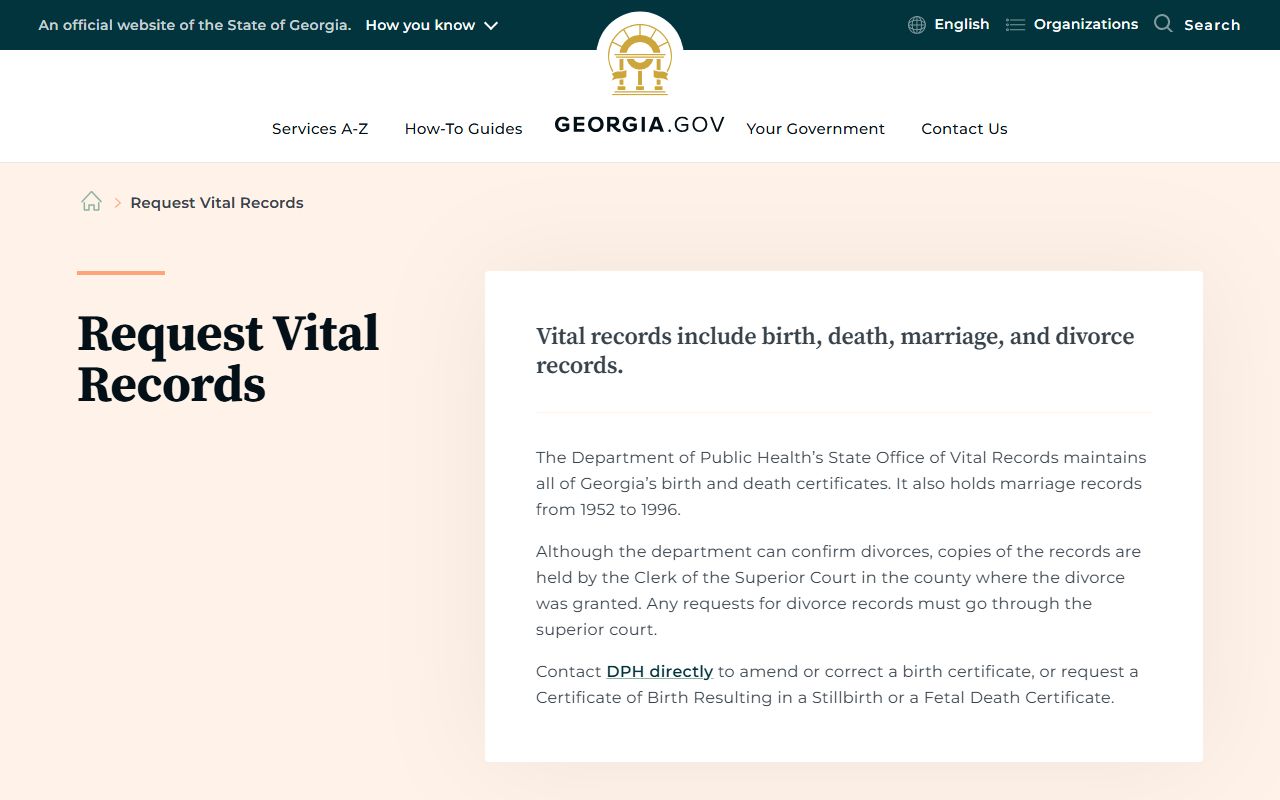
This state guide helps separate local Probate Court copies from Georgia vital-record requests that follow state agency rules.
White County Probate Record Contents
A White County probate record may show the petition or application, estate name, decedent name, will status, fiduciary appointment, oath or letters, notices, inventories, annual returns, orders, and final discharge documents when those items exist in the file. Guardianship and conservatorship files may show the protected person's case caption, petitions, orders, reports, and bond or accounting activity, but sensitive facts may be limited.
Marriage records are different from estate files. Probate Court issues marriage licenses, records returned licenses after the ceremony, and provides certified marriage copies under its local rules. Divorce decrees are not Probate Court records in Georgia. They are Superior Court records requested through the Clerk of Superior Court in the county where the divorce was granted, so White County divorce copy requests should be separated from White County probate records and marriage-license requests.
Restricted White County Probate Records
Georgia public-record rules presume many records are open, but probate access has clear limits. Guardianship and conservatorship records may include medical facts, financial account details, protected-person data, and minor information. Vital-record requests may require eligibility or proof of identity. Adoption records are sealed under O.C.G.A. 19-8-23 and belong to Superior Court jurisdiction, not a routine public probate search.
The Georgia Attorney General's open records request instructions explain the general custodian-request model, while the court office decides what can be inspected or copied from a specific White County probate file. A sealed file, mental-health-related record, protected adult matter, or minor guardianship may require party status, attorney authority, agency authority, or a court order.
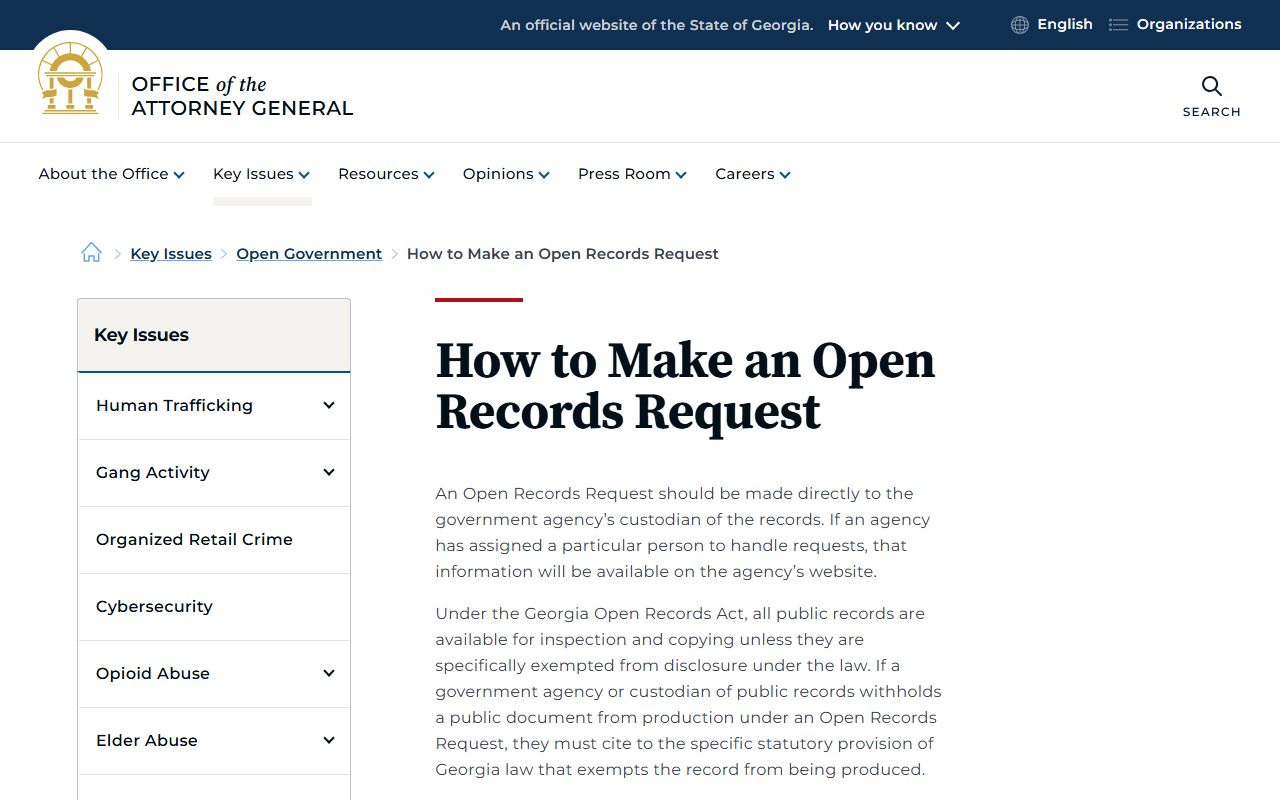
Open-records guidance supports public access, but probate restrictions still depend on the specific record and the court's authority to release it.